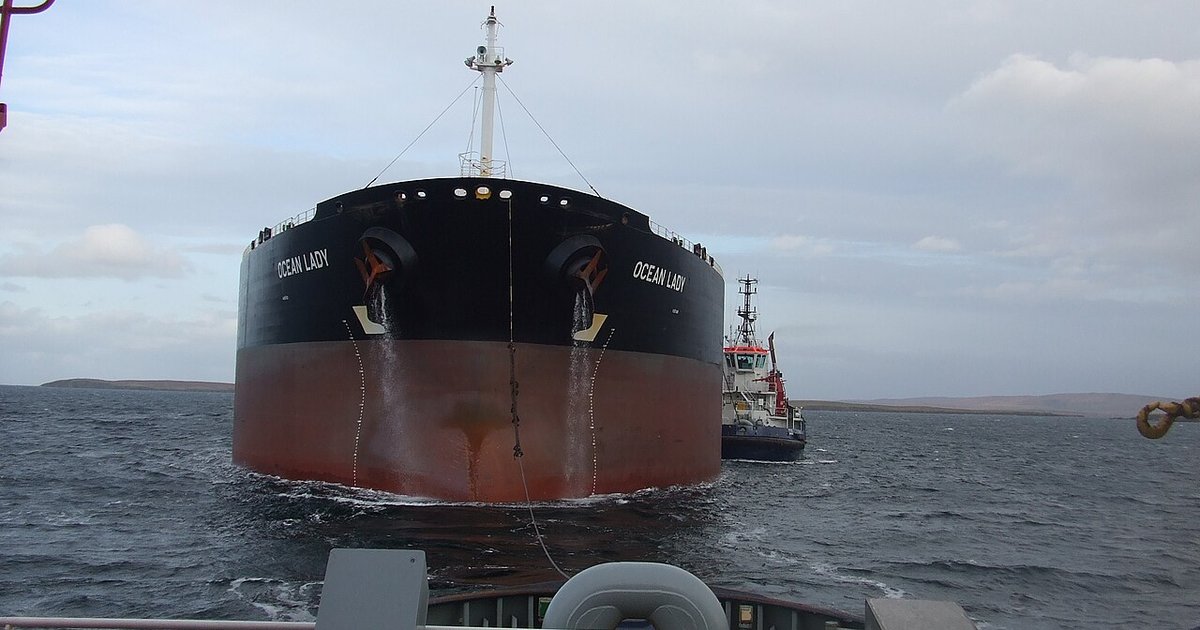
Brent at $85 and a 20 Percent Toll Nobody Priced In
Trump reimposed a naval blockade on Iranian ports, declared the US would "guard" Hormuz, and announced a 20 percent toll on all cargo transiting the strait. Brent surged 9.6 percent — the largest one-day jump since May 2020. The question now: is $85 the floor or the ceiling?
9.6 percent in a single session. The largest one-day jump in Brent crude since May 2020.
The ceasefire lasted less than a month. On Monday, Trump reimposed a naval blockade on Iranian ports and declared that the US would "guard" the Strait of Hormuz — and charge for the privilege. Ships transiting the strait would pay a 20 percent toll on cargo value, Trump told Fox News. "We're going to keep the strait, and we'll probably run it" (CNBC, July 13).
Brent settled at $83.32 on Monday, up 9.6 percent. WTI rose 9.4 percent to $78.14. By Tuesday's Asian session, Brent was pushing $85 — a one-month high — and WTI was approaching $80. Reuters confirmed the move as the highest since the US-Iran memorandum of understanding was signed June 17 (Reuters, July 14).
The 20 percent toll is the variable that nobody's models contained. Blockades have happened before. Missile strikes on tankers have happened before. But a US president unilaterally announcing a 20 percent tax on all cargo transiting the world's most important oil chokepoint — that's new. Iran's Foreign Minister Abbas Araghchi pushed back, calling Trump's 20 percent toll "too much" and reiterating Iran's claim as the strait's guardian. The UN's International Maritime Organization separately said there is "no legal basis" for mandatory tolls on natural straits. How exactly the US Navy would collect and enforce the fee remains unclear (Axios, July 13).
Meanwhile, the physical market is tightening. Ship traffic through Hormuz slowed to a trickle over the weekend. Tanker rates have jumped. The forward curve is flattening as traders price the risk that this isn't a one-week disruption — that the blockade, the toll, and the tit-for-tat strikes could persist through the summer. The June 17 MOU that briefly paused the conflict is, in the words of one Seoul Economic Daily analyst, "effectively scrapped" (Seoul Economic Daily, July 14).
Here's what makes this different from the February war shock, which pushed Brent to $120 by March: the global economy is softer. China's growth is slowing. European manufacturing is in contraction. The IMF cut its 2026 global forecast two weeks ago. Oil demand growth was already decelerating before the blockade. A sustained price above $85 into August would squeeze consumers at the pump just as the Fed's June CPI — which showed a 3.5 percent headline, cooled by a brief gas-price truce — is already being superseded by the reality at the pump.
The question isn't whether oil goes higher. It's whether $85 is the floor or the ceiling. Goldman estimates that a month-long Hormuz halt could double European gas prices. For oil, the analogous scenario — a sustained blockade through August — would put $100 back on the table. Brent was at $120 in March. It fell to $70 on the ceasefire. It's at $85 now. The market is telling you the ceasefire was a pause.
Trump's 20 percent toll may prove unenforceable. It may prove aspirational. But the oil market isn't waiting to find out. It's pricing the strait as a war zone, and the toll is just the cherry on top.
Sources

The Strait of Hormuz is a major oil shipping route and the epicenter of the U.S. and Israel's ongoing war with Iran.

Trump declared a 20% toll and blockade in the Strait of Hormuz, sending oil prices surging nearly 10% and raising fears the Fed could shift toward a rate hike.

Brent crude futures gained $1.68, or 2%, to $84.98 a barrel, while U.S. West Texas Intermediate (WTI) crude rose $1.65, or 2.1%, to $79.79 a barrel. On Monday, Brent had surged 9.6%, marking its biggest single-day jump since May 2020. Crude prices are now at their highest levels since the United States and Iran signed a memorandum of understanding to end the war on June 17.

West Texas Intermediate (WTI) or the US Crude gained as much as 9.4% on Monday and is up another 1% on Tuesday to trade near the $80 a barrel mark. Brent Crude rallied by a similar quantum overnight and is now near the mark of $85 a barrel.

Oil prices climbed to their highest level in four weeks on Tuesday after the United States reinstated a naval blockade on Iran and intensified military strikes, while Tehran stepped up retaliatory attacks in and around the Strait of Hormuz, raising fresh concerns over global energy supplies.

Crude prices rally while energy ETFs climb after the U.S. Central Command confirms blockade enforcement will resume on Tuesday.

Trump said the U.S. “will be reimbursed” for helping ships through the Strait of Hormuz. Crude oil hit its highest price in about a month.

Donald Trump’s plan to charge ships to use the strait would be a marked departure from the US’ previous insistence that passage through the crucial waterway should be free and open for all.