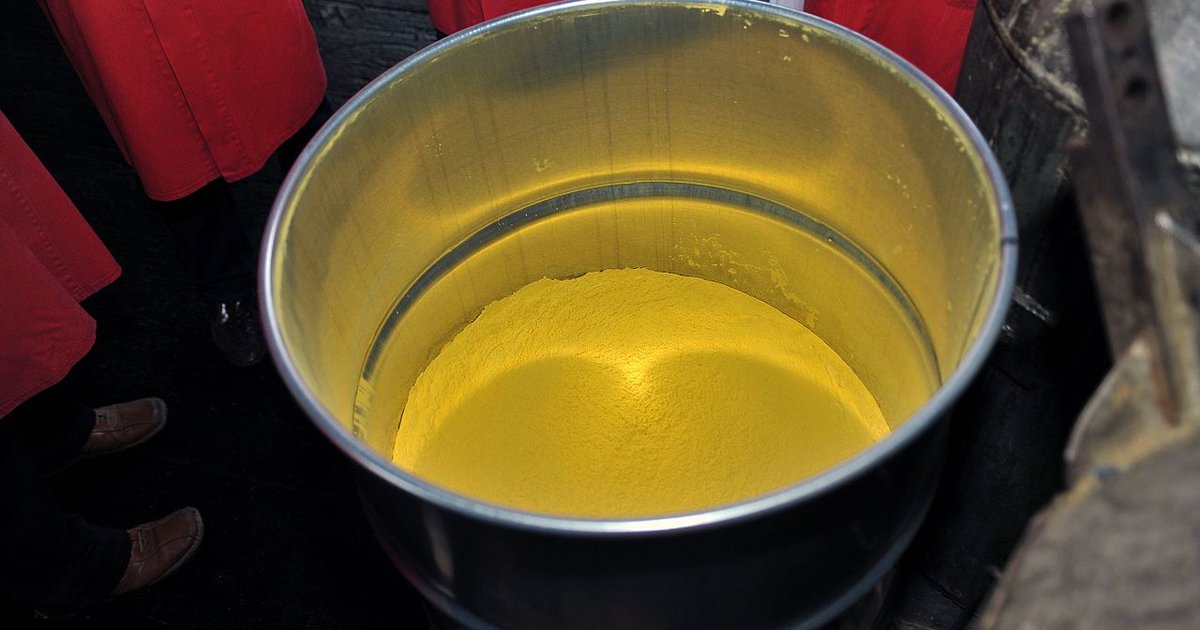
The Backdoor AI Trade Is Yellowcake
Spot uranium at $85.60. Term contracts at $90. Enriched uranium at an all-time high of $190 per SWU. The AI data center buildout needs gigawatt-scale baseload power — and nuclear is the only answer that scales.
$85.60 a pound. That's the spot price of uranium on July 13 — and it's not even the interesting number.
The interesting number is $90. That's where long-term uranium contract prices sit, the highest since 2008. And above that, $190 per separative work unit for enriched uranium — an all-time high, according to the Financial Times. The gap between spot and term prices tells you everything: utilities aren't buying on the spot market because they're scrambling to lock in multi-year supply at almost any cost (Trading Economics, July 13; DCD / FT, 2026).
Here's why. The AI data center buildout needs power. Not compute power — electrical power. Global data centers consumed 415 terawatt-hours in 2024. The IEA's "Key Questions on Energy and AI" report projects that climbing to 945 TWh by 2030. You cannot power that with wind and solar alone, because AI workloads don't sleep. They need baseload — 24/7, carbon-free, gigawatt-scale. Nuclear is the only answer that scales.
The hyperscalers have figured this out. Meta signed deals with three nuclear companies for up to 6.6 gigawatts of power — making it the biggest nuclear buyer among the hyperscalers. Microsoft locked in 835 megawatts via a $16 billion, 20-year PPA for the Three Mile Island Unit 1 restart. Google committed to 500 MW from Kairos Power. Amazon anchored a $500 million funding round in X-energy, with an initial four-reactor, 320 MW deployment alongside Energy Northwest in Washington state — the first step toward a broader 5 GW target (LA Times, January 2026).
The demand side is locked in. The supply side is broken.
Utilities undercontracted for uranium for 13 years, assuming the post-Fukushima nuclear slowdown was permanent. It wasn't. Now they're rushing to sign long-term supply agreements, and no major new Tier-1 mine supply is expected to meaningfully close the deficit before 2030. Cameco — the world's largest publicly traded uranium producer — holds 230 million pounds under long-term contracts, which means it's sold out. New production takes a decade to permit and build. The supply crunch is structural, not cyclical (Crux Investor, 2026).
The policy tailwind is real. Thirty-eight countries pledged to triple nuclear capacity by 2050. The US Department of Energy is offering up to $26.5 billion in loan guarantees to revive the domestic fuel cycle. More than 30 countries endorsed significant nuclear expansion. The political consensus around nuclear has shifted — the same countries that were phasing it out a decade ago are now scrambling to build it, because the alternative is data centers running on coal and gas, and nobody wants that (24/7 Wall St., June 2026).
Copper gets the AI commodity narrative. Everyone talks about the wire. But uranium is the commodity that AI actually can't function without — because without nuclear power, the data centers that run the models don't have electricity. You can run an AI economy without copper eventually — aluminum substitutes, fiber replaces some copper runs. You cannot run it without power.
The market is pricing this. Uranium stocks have pulled back — Cameco fell roughly 21 percent from its highs over the past month, per 24/7 Wall St. — but the long-term contract price keeps climbing. The spot price at $85.60 is the floor. The term price at $90 is the real signal. And $190 per SWU for enriched uranium is the number that tells you the supply chain is maxed out.
Copper is the AI trade everyone knows. Uranium is the one nobody's talking about — yet.
Sources

Meta signs multi-gigawatt nuclear deals to power AI data centers
13 deals. 9.8 GW committed. Every tech giant is going nuclear for AI. The definitive tracker.

AI power demand and 13 years of utility under-contracting are driving uranium term prices to a 14-year high of $90/lb, with no new mine supply before 2030.

Stay informed on X-energy's latest news and breakthroughs in nuclear energy technology and clean energy initiatives.